
Vague Complaints
Why an increase?
In recent decades, there has been a noticeable increase in people struggling with vague symptoms[1]. They don't feel like themselves, suffer from chronic fatigue, headaches, muscle and joint pain, concentration problems, brain fog, digestive issues, skin rashes, or a constant flu-like feeling without ever actually being sick—and without a clear diagnosis being possible within the conventional medical system.
For many, this marks the beginning of a long and frustrating journey of examinations, specialist visits, and temporary solutions that don't address the root cause. What is going on with our health? Why do so many people seem to have vague complaints that are difficult to explain?
The weakened immunity of modern humans
One of the major developments of the past 80 years has been the decline in general human resistance.[2]. Where our immune system used to be stronger and more resilient, we now see that more and more people are struggling to ward off external disease-causing influences.
This weakening doesn't come out of nowhere[3]. Factors such as chronic stress, excessive exposure to toxic substances (such as pesticides, heavy metals, and air pollution)[4], significant increase in radiation (such as electrosmog, 3G, 4G, and 5G)[5], Poor dietary habits, the use of antibiotics and other medications, and a lack of natural movement and sunlight all contribute to undermining our natural defenses.[6]
Furthermore, we live in a society where we are increasingly disconnected from nature. We have less contact with the earth, with animals, with clean air, and pure food. All of this affects our microbiome.[7] – the collection of bacteria, viruses, and fungi in and on our bodies – which is closely linked to the functioning of our immune system.
Vague complaints as a signal
Many of the complaints people experience are essentially signals from the body that something is out of balance. These complaints are often dismissed as psychosomatic or stress-related, while in many cases there is a physical cause — it's just not recognized by standard diagnostic methods.
In our practice, for example, we regularly see people with complaints such as:
- Chronic fatigue
- Painful joints and muscles for no apparent reason
- Concentration problems or brain fog
- Abdominal discomfort and bloating
- Oversensitivity to sounds, smells, or light
- Skin conditions such as eczema or rash
- Unexplained feelings of anxiety or mood swings
These complaints can be a consequence of an underlying infection, a toxic burden, or a disruption in the body's energetic balance. Think, for example, of dormant infections with bacteria such as Borrelia (the cause of Lyme disease), viruses like Epstein-Barr, or parasitic load. But also lingering symptoms after an infection, such as COVID-19, can persist for months or years.
Vague complaints caused by Lyme and co-infections
The Silent Underminers
Lyme disease is a prime example of how an infection can remain under the radar for years. Caused by the bite of an infected tick, Lyme is often difficult to diagnose and even harder to treat once it becomes chronic.[8]. Many people have the disease without ever being aware of a tick bite.
In addition, Lyme disease is often accompanied by so-called co-infections: other bacteria, viruses, or parasites that are transmitted simultaneously or become activated when the immune system is weakened. Think of Bartonella, Babesia, Ehrlichia or Mycoplasma.
These infections can cause a complex set of symptoms that vary greatly from person to person. Regular blood tests often do not provide clear results, and patients are left with their complaints. The reason for this is that regular blood tests do not IN the blood cells test for the presence of infections. This is only done in very specific blood tests, often performed in Germany[9]. Regular blood tests measure the body's reaction (antibodies) to the presence of Borrelia. Therefore, it does not directly measure if you are sick. Many infections can be detected if testing is done inside the blood cells. However, these are expensive tests that are not covered by insurance, and patients must pay for them themselves.
Diagnostics in Naturopathic Medicine
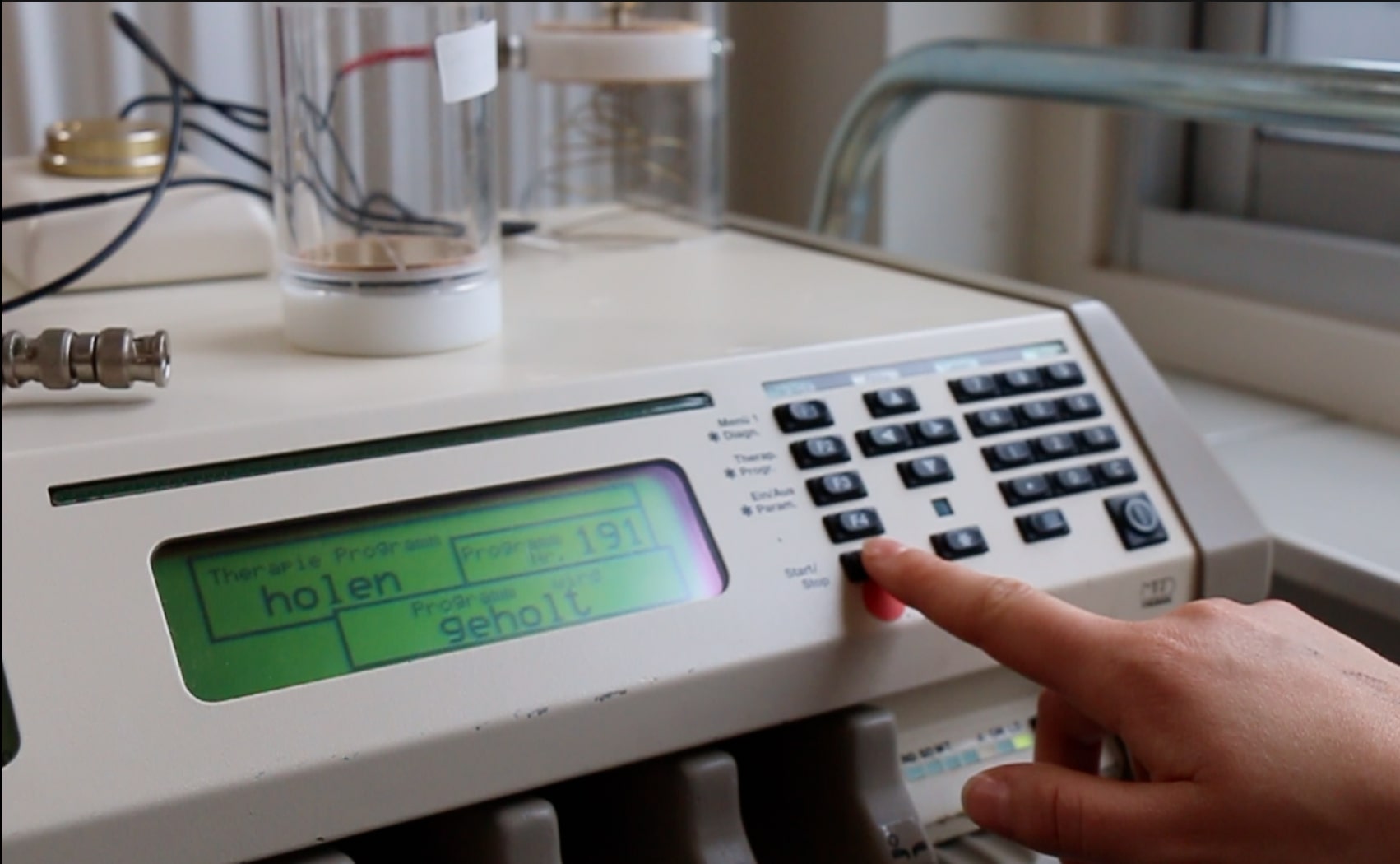
In our naturopathic practice, we take people's ‘vague‘ complaints seriously, even when there is no ’hard' medical diagnosis. We work with advanced methods such as Hunter Metatron scan en Bioresonance, with which we can examine the body on an energetic level.
These technologies make it possible to detect which organs, systems, or tissues are out of balance, and which burdens underlie them. Among other things, we can detect with this:
- Viruses, bacteria, fungi, and parasites
- Toxic load (such as heavy metals or pesticides)
- Allergies and food intolerances
- Vitamin and mineral deficiencies
- Blockages in the meridian system or the lymphatic system
The scan works based on frequency analysis. Everything in the body has a certain vibration or resonance — if a cell, organ, or microorganism is not vibrating in harmony, we can detect that. This gives us an in-depth insight into where the disruption is, and why the body is struggling to heal itself.
Treatment: supporting the body in recovery
Once the underlying causes of the ‘vague’ complaints are clear, we can focus on targeted treatment. Instead of suppressing symptoms, we focus on activating the body's self-healing abilities.
We are making use of a combination of:
- Bioresonance therapyto neutralize disruptive frequencies and bring the body back into balance
- Frequency therapyto detect and neutralize pathogenic frequencies
- Phytotherapy and supportwith herbs, vitamins, and minerals
- Detox programsto rid the body of toxins
- Nutritional advicetailored to individual needs
- Lifestyle advicesuch as stress reduction, exercise, and sleep recovery
The importance of recognizing vague complaints and patience
For many people, it's already a great relief to hear that their complaints to be real, and that there are indeed indications of a physical cause. Recognition is the first step in the healing process.[10]
Recovering from long-term complaints requires time, attention, and commitment—from both the therapist and the client. However, experience shows that the body is capable of much when it receives the right support.
Conclusion
In many cases, unexplained complaints are not simply ‘in one's head.’ They are an expression of a deeper imbalance in the body, often caused by infections, toxic exposure, and a weakened immune system.
Regular medicine often has no answer for this (yet), but within naturopathy, we can—using technologies such as the Hunter Metatron scan and bioresonance—find out what's going on and support the body towards recovery.
Have you been feeling unlike yourself for a long time? Do you have complaints that no one has an answer for? Then we invite you to look a step further. You don't have to do it alone.
Would you like to know more or make an appointment?
Contact us at 0343-531794 or visit our website https://www.arsbiomedica.com for more information about our methods, rates, and possibilities.
[1] NRC (2023). More people with vague complaints
[2] Rook, G. A. W. (2013). Regulation of the immune system by biodiversity from the natural environment. Clinical & Experimental Immunology, 171(1), 18–25
[3] Segerstrom, S. C., & Miller, G. E. (2004). Psychological stress and the human immune system: a meta-analytic study. Psychological Bulletin, 130(4), 601–630.
[4] Landrigan, P. J., et al. (2018). The Lancet Commission on pollution and health. The Lancet, 391(10119), 462–512
[5] Kostoff, R. N., et al. (2020). Adverse health effects of 5G mobile networking technology under real-life conditions. Toxicology Letters, 323, 35–40
[6] Blaser, M. J. (2014). Missing Microbes: How the Overuse of Antibiotics Is Fueling Our Modern Plagues
[7] Gilbert, J. A., et al. (2018). Current understanding of the human microbiome. Nature Medicine, 24(4), 392–400
[8] Horowitz, R. I. (2013). Why Can’t I Get Better? Solving the Mystery of Lyme and Chronic Disease
[9] BCA Clinic Germany. (n.d.). Diagnostics Lyme & Co-infections
[10] van Dijk, M. T., & van Laarhoven, A. I. M. (2021). Recognition as medicine. NTvG